

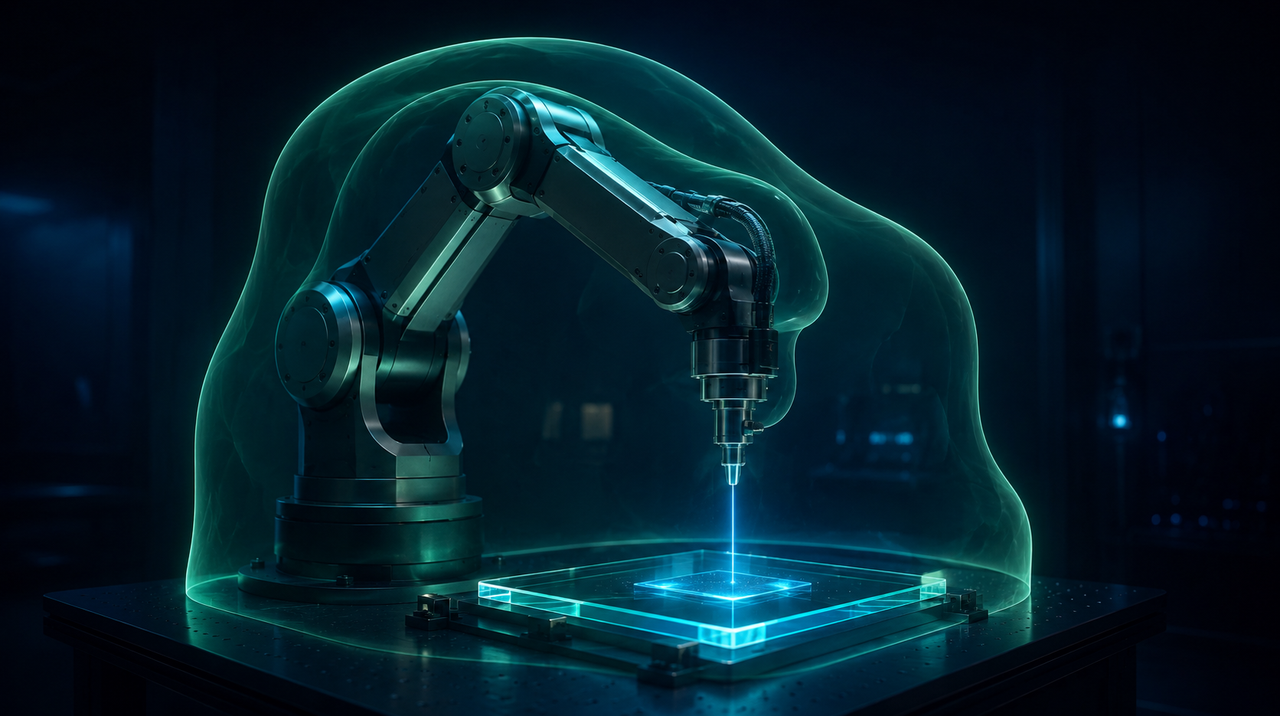
On 27 August 2026 Anthropic opened a research preview of the Model Hardware Standard, a specification that lets AI agents operate physical equipment: microscopes, liquid handlers, robotic arms, lasers.
The published results are good enough to make an easy headline. It is worth looking at what sits underneath them, because that is the part you can actually use.
The numbers
- QuEra Computing: recovering a laser lock inside a quantum computer went from 58% success, at 150 seconds per attempt, to 99.3% across 700 trials — with recovery time dropping to 0.9–5.4 seconds for the simpler disturbances. The equipment costs around $700,000.
- Genentech: the agent independently optimised liquid transfer flow rates, landing on roughly 140 µL/s for water and 10 µL/s for viscous protein samples. Experts confirmed those parameters were reasonable.
- University of Washington: six instruments integrated in under a week, against weeks of work in previous attempts with vendor platforms.
- Carnegie Mellon: driver and orchestration finished in eight hours, versus the several weeks a vendor-built setup typically takes.
What made it work was not a smarter model
This is the part the headline loses. The standard defines safety limits at the device level that the agent is required to respect. At HHMI Janelia, those constraints stopped the agent from using excess laser power — which would have bleached the fluorescent molecules and ruined the sample.
And there is an even more telling behaviour: at QuEra, according to Anthropic, Claude often stopped to wait for human confirmation before performing any action it judged even slightly risky.
In other words: the jump from 58% to 99.3% did not come from turning the AI loose in the lab. It came from writing the limit first and putting the human at the right point. It is the same conclusion as two other stories this week — the 1,200 agents that found each other and the plan Meta cancelled: what decides the outcome is the perimeter, not the capability.
The bubble detail
Anthropic records the limitation itself, and it is too specific to be marketing. Claude still struggles with physical, chemical and biological constraints, particularly when troubleshooting errors that call for real-world intuition.
The example given: while handling liquids, the model did not initially recognise that bubbles create a cascade of problems. A human had to point it out.
Hold on to that detail, because it sums up the state of the art better than any number. The agent optimised the flow rate on its own, but did not know a bubble ruins everything — and nobody who has worked with liquids for two years would need to be told. The model learned the physical world by reading text and looking at images; what it lacks is what you learn with your hands.
Want to automate a process with machines, people and error in the middle?
We map where AI belongs, where it does not, and where a human confirms.
Does this reach your business? Not yet, and that is worth saying
The preview opened by application to a selected group of research labs and advanced manufacturers. Partners include Genentech, AWS, Danaher, QIAGEN, Tecan, Universal Robots, Doosan Robotics, MBF Bioscience, Hugging Face and Raspberry Pi. The code is not open yet — Anthropic says it has more work to do on the standard first.
No bakery, clinic or workshop is installing this in 2026. We wrote in August that the money in physical AI concentrates in very few companies, and that still holds: what reaches a small business is falling component cost, not the frontier standard.
What you can take away today
Three things, none of which requires a laboratory.
1. Write the limit before automating, not after the first scare. What held the laser back was not the agent's good judgment, it was a power ceiling defined in the device. In an ordinary company the equivalent is mundane: the maximum amount the system commits without approval, how many messages the bot sends per hour, which fields it may change in a record. That takes an afternoon to write and avoids the expensive scare.
2. Choose where the human confirms — and accept that this is the product, not the flaw. Claude stopping to ask is not slowness; it is why the number reached 99.3%. The right question is not "can we take the person out of the loop?" but "at exactly which point is their confirmation worth more than the speed?".
3. Whoever knows the process is still indispensable. The bubble story says it plainly. Automating well requires someone who knows where the process actually fails — and that person almost always already works at the company, even if they are not the one who understands technology.
The honest summary
The news is good and the advance is real: integrating equipment went from weeks to hours, and an agent recovered a very expensive laser with 99.3% success.
But what made it happen fits in one sentence that applies to any automation at any scale: the standard that defines the limit matters more than the model that performs the task. Whoever reverses that order — buy the model, think about limits later — will find the bubbles the expensive way.
Sources
- Anthropic — "Previewing the Model Hardware Standard" (27 August 2026), with results from QuEra, Genentech, University of Washington, Carnegie Mellon and HHMI Janelia.
Frequently asked questions
What is Anthropic's Model Hardware Standard?
It is a shared specification, in research preview since 27 August 2026, that lets AI agents operate physical devices such as microscopes, liquid handlers, robotic arms and lasers. It defines safety limits at the device level that the agent is required to respect.
What results were published?
At QuEra, recovering a laser lock went from 58% success, at 150 seconds per attempt, to 99.3% across 700 trials. At Genentech, the agent independently optimised liquid transfer flow rates. At the University of Washington six instruments were integrated in under a week, and at Carnegie Mellon the driver was ready in eight hours.
Why did performance jump like that?
It was not the model becoming more capable. The standard defines limits at the device level — at HHMI Janelia they stopped the agent from using excess laser power — and it keeps a human in the loop: at QuEra, Claude often stopped to ask for confirmation before any action it judged even slightly risky.
What limitations are acknowledged?
Anthropic itself notes that the model still struggles with physical, chemical and biological constraints, especially when troubleshooting errors that need real-world intuition. The example given is that while handling liquids Claude did not initially recognise that bubbles create a cascade of problems — a human had to point it out.
Can my company use this today?
Not yet. The preview opened by application to a selected group of research labs and advanced manufacturers, and the code is not open: Anthropic says it has more work to do on the standard first. No date has been announced.
What can a small company apply from this news?
Three things that do not require a lab: write the limits before automating, such as the maximum amount the system commits without approval or which fields the bot may change; choose the exact point where a human confirms, treating that as part of the design rather than a flaw; and involve whoever knows the process, because that is the person who knows where it actually fails.