

| Humanoid Robotics and Autonomous Systems 2-minute read |
| By Peter Diamandis |
| What it is |
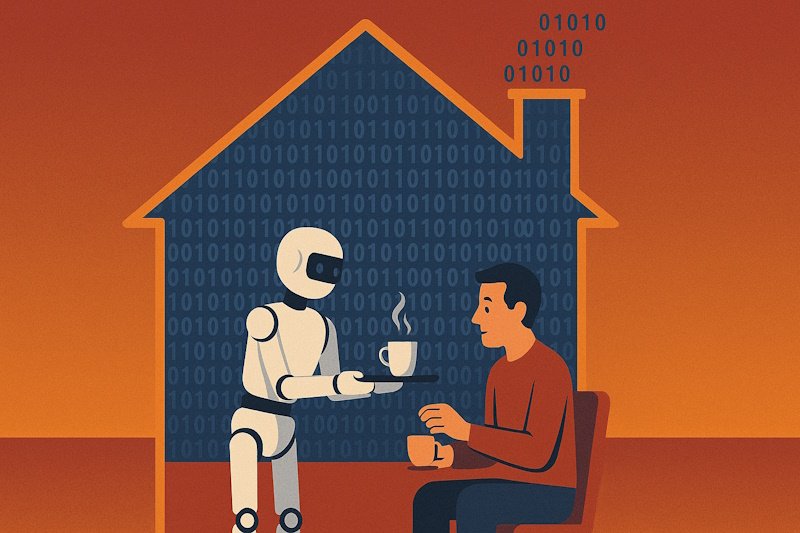
| AI scaling laws thrive on data, and humanoid robots are about to become one of the world's largest data generators. We are already on track to create 200 zettabytes of data in 2025. That is enough to fill 1.5 trillion iPhones or stream 40 trillion years of movies. But humanoid robots will add an entirely new dimension. 1X Technologies CEO Bernt Bornich revealed the scale during my recent visit to the company's headquarters in Palo Alto: “If you have 10,000 robots out there and they collect data for most of the day, then that is more data than the non-duplicated useful data that is uploaded to YouTube every day.” (YouTube receives more than 20 million video uploads daily, though not all represent unique content.) Just 10,000 domestic robots will generate enormous amounts of training data, and we are heading toward billions of humanoids by 2040. This is the data surge that will drive us toward advanced AI. Just as a child learns by crawling through the house, your robot's AI models will learn in the same way. Unlike factory robots, whose repetitive task data stagnates after 20 to 40 hours, domestic robots encounter infinite diversity. “At our current scale, we see no kind of limit to diversity,” explains Bornich. Every interaction with a coffee cup, every door opening, and every social context generates training data that transforms artificial intelligence. |
| Why it matters |
| Home environments are data goldmines “Intelligence comes from diversity,” emphasizes Bornich. “You don't need data about the same thing over and over again.” Home environments offer unlimited scenarios: navigating social contexts, handling delicate objects, adapting to family routines, dealing with unexpected situations. Factory robots learn specific tasks quickly but hit a learning plateau. Domestic robots, however, face “tens of thousands” of hours of diverse learning scenarios with no visible limit. Shared learning at scale The breakthrough goes beyond data volume and includes shared learning. When one robot masters the skill of cracking eggs or folding laundry, that knowledge is transferred to every other robot in the fleet through cloud model updates. “Not all robots will be the same, but they will share a backbone of intelligence,” explains Bornich. Individual robots develop personalized behaviors while contributing to collective intelligence. The implications of abundance are profound. We are not just building better robots — we are also accelerating the path to advanced AI through the richest and most diverse dataset ever assembled. Every home becomes a training ground for the future of intelligence itself. Yes, the robot revolution is coming to your home… and at the same time, your home will become the classroom of superintelligence. |