
We published this article in 2020, when accepting payments directly on a smartphone was still an announced promise. We updated the text in July 2026 with what actually happened — and with the figures from the Brazilian market.
The smartphone as a card reader: what it is
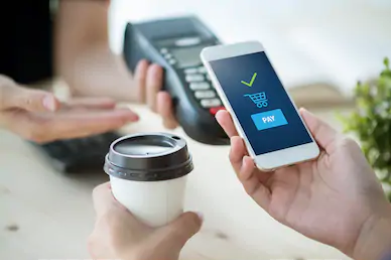
An NFC-enabled smartphone can accept contactless payments without a card reader: the device itself acts as the terminal. The customer taps their physical card, phone, or smartwatch against your handset, and the transaction goes through right there. The technology is called tap on phone (or tap to pay), and in Brazil it has moved beyond novelty to become everyday counter practice.
The 2020 promise
In the first version of this article, the news was that Banco Inter would launch contactless payment directly on the smartphone, eliminating the need for a card reader. At the time the idea sounded bold: small business owners depended on renting or buying a terminal, and the card reader was the visible symbol that a business accepted cards. If you did not have the device, you could not sell on credit.
What has happened since then
The feature moved from announcement to infrastructure. In September 2023 Apple enabled Tap to Pay on iPhone in Brazil, allowing merchants to accept contactless card payments directly on the device, with no extra hardware — initially through a single acquirer, later through others. On Android, the feature had already been offered by various payment providers.
The result is that today the question in the headline has a partial answer: the card reader has not disappeared, but it is no longer mandatory.
The numbers: contactless has become the standard
Contactless payment has stopped being the exception and become the dominant way to pay in person in Brazil. According to Abecs, the association that brings together card companies, by March 2026 contactless already accounted for 74.8% of in-person card transactions — five years earlier the figure was just 8%. In the first quarter of 2026 alone, these transactions moved R$ 504.8 billion, 19.3% more than in the same period of 2025.
And the smartphone as a card reader has taken off
Within this movement, tap on phone is the fastest-growing segment. Still according to Abecs, in the first quarter of 2026 R$ 27.1 billion was processed with smartphones acting as card readers — a year-on-year increase of 114.6% and a two-year increase of 1,188.8%.
The breakdown by card type says something about who is using it:
- Credit: R$ 25.4 billion, growth of 115.6%
- Debit: R$ 1.2 billion, growth of 105.4%
- Prepaid: R$ 0.5 billion, growth of 92.6%
Almost all the volume is on credit. In other words: this is not people paying for a cup of coffee — these are meaningful-ticket sales being closed without any terminal on the counter.
What you need to start accepting payments
- An NFC-enabled phone. On Android, most recent devices qualify; on iPhone, model XS or later.
- An account with a payment provider that offers the feature (the main Brazilian acquirers and fintechs already do).
- That provider's app installed and your account approved.
There is no hardware to buy, rent, or carry around. The device already in your pocket becomes the terminal.
What about Pix by contactless?
In February 2025 the Banco Central launched Pix por aproximação, which allows payments by tapping a phone, with Pix embedded in digital wallets, without opening the banking app. It is a parallel track to card payments: while tap on phone removes the hardware from the side of the person receiving payment, Pix por aproximação simplifies the side of the person paying.
When a dedicated card reader still makes sense
To be honest: the smartphone does not solve everything. A card reader still makes sense when a business has high, constant transaction volume (smartphones overheat and batteries run out), when printed receipts are required, when the owner's device cannot be passed between employees, or when the point of sale has unstable connectivity and a dedicated terminal performs better.
In practice, many businesses end up with both: the card reader at the fixed checkout and the smartphone as a backup for queues, delivery, market stalls, and off-site service calls.
What this changes for sellers
The barrier to accepting card payments has virtually disappeared. A freelance professional, a market vendor, a service provider who visits clients at home — all of them can now accept credit without investing in equipment. From a cost perspective, add to this the elimination of the monthly terminal rental fee, which used to weigh on the cash flow of low-volume sellers.
For the customer, the difference is less waiting time and an experience they already know from contactless card payments. For the merchant, it means one fewer "just a moment while I grab the card reader."
Sources
Frequently asked questions
Do I need internet access to accept contactless payments on my phone?
Yes. The transaction is authorized online, so the device needs to be connected via Wi-Fi or mobile data.
Is the customer's card data stored on my phone?
No. The contactless read is processed by the payment provider's app and sent for authorization; the card number is not stored on the merchant's device.
Can I receive both Pix and card payments on the same phone?
Yes. They are separate, independent features: Pix through your bank or fintech account, and contactless card payments through the app of the provider that offers tap on phone.