

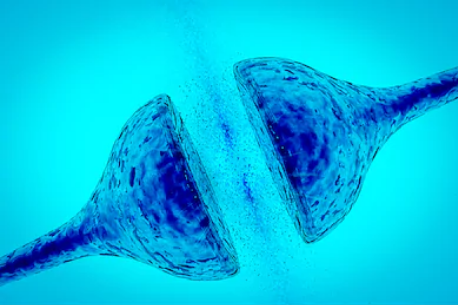
Scientists from the United Kingdom have developed a chip with “artificial neurons” capable of repairing damage caused by Alzheimer’s and other diseases (chronic or degenerative).
The chip can mimic the responses of neurons when activated by the nervous system. The initiative was tested on rats.
During testing, scientists were able to reproduce signals from respiratory neurons and from the hippocampus, the region of the brain responsible for memory. The expectation is that the chips will be tested on humans in the future.
The “artificial neurons” enable the creation of a wide range of solutions. Alain Nogaret, the project leader, stated that specialists are developing smart pacemakers in which neurons respond to the heart’s demands in real time, just as they do in healthy hearts.

The currently available alternative stimulates the heart to pump at a constant rate. The study on “artificial neurons” is being conducted at the University of Bath and its results were published in the journal Nature.
Brain Chips
The United Kingdom is not the only place where chips are being developed to assist in the recovery from diseases or human conditions.
In the United States, Neuralink, Elon Musk’s startup — CEO of Tesla — is developing chips to connect human brains to machines, with the goal of enhancing their capabilities.
He stated that the chip could combat and assist in the treatment of schizophrenia, Alzheimer’s, Parkinson’s, and others.
On the other side of the world, in China, Tianjin University developed a chip that identifies brain signals and converts them into code for computers.
Called “Brain Talker”, the initiative aims to identify users’ intentions solely through their neural waves.
Like Elon Musk’s chip, Brain Talker could completely transform the usability of devices. However, that is still a conversation for the future!