

1 – What Is Augmented Reality?
Basically, augmented reality blends the real with the virtual, allowing these two worlds to create almost magical scenarios, previously existing only in people's imagination. This technology is completely immersive and works with the help of a camera and an application specifically developed for this purpose.
2 – Tech Giants Are Betting on Augmented Reality
Augmented reality is one of the biggest breakthroughs in the technology sector and has been explored by the two leading companies in the field: Google and Apple. The feature is being implemented primarily in smartphone operating systems and mobile applications, with the goal of offering users new experiences and perceptions of technology in the real world.
What can be expected in the near future are smartphones increasingly prepared to work with augmented reality applications, with cameras and systems specifically designed to deliver new experiences to users.
In their most recent investments, Google and Apple have begun implementing AR systems in their mobile devices, such as smartphones and tablets. Google invested heavily in Project Tango technology and is working on a new system called ARCore, while Apple has already gained significant relevance with its ARKit system.
Both projects open up a promising field for large-scale investment in the development of applications and software specifically for augmented reality. It is, without a doubt, an expanding market well worth exploring!
3 – Augmented Reality Is the Future of Technology
If you have never heard of augmented reality, know that within a few years this type of technology will be more present in your daily routine than you might imagine. Investments in the development of technologies and applications for augmented reality use are in full growth. Proof of this is that Google stated it intends to make this type of technology available to more than 100 million users through the ARCore system, still in development. This tool is expected to be available initially to users of smartphones such as the Galaxy S8 and other high-end devices.
Augmented reality can already be considered the future of technology. This concept, which consists of promoting immersive experiences for the user by projecting the digital world onto the real world, will use smartphone cameras to expand access to AR platforms and solutions.
The idea behind augmented reality on smartphones is to use device cameras to overlay virtual objects, maps, information, and various other elements onto the physical world — that is, the real environment — as happened, for example, with the game Pokémon Go, one of the biggest successes in this market to date.
4 – How Is Augmented Reality Being Used?
The technology is already being used by some important players in the international market. The furniture chain Ikea is a company that has been betting on the augmented reality sector and launched an application that allows users to visualize objects and furniture in the rooms of their homes before purchasing them. The feature is available through Apple's ARKit system and offers 98% accuracy when displaying a piece of furniture positioned in an environment at actual size.
Augmented reality can be incorporated into various business segments, and the possibilities are promising. Markets such as construction, industry, fashion, gaming, and even medicine are set to benefit directly from augmented reality. It is a technology that will certainly evolve rapidly and become part of society's everyday life in the near future.
To learn more about this innovative technology with great potential, simply rely on the specialized support of an augmented reality agency!
5 – The Benefits of Augmented Reality
Augmented reality provides an immersive experience for users, with real interaction between people and digital elements and objects. The images projected and seen in the real world are purely immersive, causing the physical and real environment to be complemented by virtual elements.
It is a technology that expands the range of information a person receives about the world around them, while also creating a special illusion and stimulus for the human senses.
The development of mobile augmented reality applications is the big bet of major technology companies such as Google and Apple. Experts believe that, in a not-too-distant future, augmented reality will become part of surgical procedures, with the projection of virtual models of the human body to complement the surgeon's vision, as well as part of the daily routine in major cities.
In the everyday life of the average citizen, augmented reality is expected to drive significant changes, influencing social relationships, entertainment, study, and the way people interact with the world. Want to know more about augmented reality? Keep following our publications!
6 – The Main Applications of Augmented Reality
The applications of augmented reality are so broad that it is difficult to
present them in a single text. This technology has been studied in depth by the world's leading players and is already part of projects in engineering, medicine, science, education, industry, the furniture market, architecture, gaming, construction, interior design, marketing, and many other strategic sectors of society.
The main objective of augmented reality is to promote a new perception of the real world through its integration with digital elements and objects overlaid onto the external, physical environment. This type of technology can be used to generate simulations, create scenarios, present digital models with a high level of realism, enhance phobia treatments, support professional training and development, among other purposes. All of this is
possible because augmented reality allows the user to continue
seeing the real world, but with the addition of virtual elements.
One example of augmented reality's applicability is in the field of
construction, with the creation of virtual apartments where prospective buyers can walk through decorated units even before the development breaks ground.
Augmented reality is also an important ally of product engineering, contributing to the development of new solutions for the consumer market. With an augmented reality application, it is possible, for example, to establish and evaluate a contrast between the real and the virtual. The applications are extremely interesting and highly promising.
7 – The Path Toward Popularizing Augmented Reality Applications
The challenges to popularizing augmented reality applications worldwide are still numerous. In addition to reducing the cost of technologies and devices, investment in diversifying existing applications is also needed. This is the medium- and long-term goal of major technology companies. Google and Apple are leading the way and working to promote the widespread adoption of these tools and technologies, implementing augmented reality systems and applications on smartphones and tablets, with all the devices necessary for using these applications.
The industry's next launches are already expected to present advances in this area, particularly in the high-end smartphone market, such as the iPhone and the Galaxy S family. To learn more about augmented reality, keep following our regular publications!
Augmented reality had its beginnings with the emergence of QR codes, 2D tags that allow the storage of various types of information. The evolution of this technology was made possible through the reading of two-dimensional codes associated with a computer program.
Currently, its primary field of application is advertising, in order to provide consumers with a closer relationship with the product, delivering information or entertainment.
Examples of features currently provided by augmented reality applications include:
- Scanning a T-shirt to teach human anatomy, virtually displaying the body's internal systems on a real individual;
- Real packaging that, through AR, interacts with the customer and projects information about its quality and history;
- Applications that measure rooms and draw floor plans simply by taking photos. You can then export the plan in PDF, JPG, PNG, SVG, DXF, and CSV formats, as well as publish it as an interactive floor plan online;
- An application featuring furniture stores and interior design ideas, where it is possible to visualize store furniture or décor concepts directly in your living room;
- Using the camera to measure the height and distance of an object, person, or building;
- An application that reads a tool or accessory through the smartphone camera and provides detailed information about it;
- Scanning a newspaper or magazine to display a short video related to the news story;
- Scanning paintings with a mobile camera in museums to project information about the artwork.
There are many augmented reality projects that are expected to be realized in the near future. This technology still has a long way to evolve and can change our perception of reality in many ways.
8 – Augmented Reality Applications in Everyday Life
Augmented reality is already a reality and is being widely used across different areas, such as marketing, medicine, entertainment, sales, education, and much more. But before learning more about the application of this technology in everyday life, it is essential to understand what augmented reality is and how it has been evolving over recent years.
9 – Applications of This Technology in Everyday Life
Today, it is already possible to see this technology being applied across different segments. Among the most common are:
Gaming: games are increasingly using augmented reality. A very well-known example is the game Pokémon Go. It was entirely designed to offer this technology to its players.
Social Media: another area making increasing use of augmented reality is media in general. Today, it is possible to find videos and images featuring this technology on the most widely used social networks, such as Facebook, for example.
Advertising: brands are also making extensive use of this technology. Coca-Cola and Nike are just a few of those that have already used augmented reality in their advertising campaigns, creating highly awarded and successful case studies.
Medicine and Healthcare: it is also possible to find very successful cases of this technology's use in the medical field. An excellent example was the project by Hermes Pardini laboratories. They used entertainment and fun through augmented reality to distract children at the moment of vaccine injections. This feature replaced fear with excitement and generated widespread praise in the market.
Other Areas: These are just some of the areas already using this technology. Augmented reality can also be found in the real estate, cultural, and even tourism sectors. Furthermore, experts believe that in a short period of time, augmented reality will be present in many other segments, bringing greater interaction and immersion to consumers and transforming everyday moments into true experiences.
10 – Fun and Leisure with Augmented Reality Applications
Augmented reality has become a common element across different applications. Today, it is being widely used by companies that seek to bring more fun to users through modern and functional programs.
11 – What Are the Benefits of This Technology?
Augmented reality is a technology with countless advantages. And among all its benefits, one in particular stands out: immersion. Augmented reality allows users to enter a virtual world, a completely new space that can make a shopping or entertainment experience much better and more productive.
12 – How Did Augmented Reality Come About?
Many people believe augmented reality is a new and very recent technology, but those who think so are mistaken. Various studies have revealed that AR had been conceived and planned for decades. It is worth noting that the term was attributed to Thomas P. Caudell, a former Boeing researcher.
13 – So, When Did This Technology Begin to Be Used?
It is believed that the first systems to use augmented reality technology to bring immersion to users were invented back in the 1990s, at the very beginning of the decade. The Armstrong Laboratory of the United States Air Force developed a virtual fixture in 1992, incorporating a system in which augmented reality was used.
14 – The Main Precursors of Augmented Reality
Before the 1990s, other technologies were already being studied, and it was only with their advancement that augmented reality could be conceived and reach various market sectors. When it comes to these precursors, one of the most important was the HUD, Head-Up Display. Developed in the 1950s specifically for pilots, its primary function was to project flight information into the line of sight, so that professionals did not need to look down at the instrument panel.
15 – Researchers Specialized in This Technology
It is also important to note that dozens of researchers studied augmented reality in depth, and thanks to their analyses, this technology gained prominence. Among these scholars are: Ivan Sutherland, Mark Billinghurst, Reinhold Behringer, Steve Mann, Louis Rosenberg, Mike Abernathy, Steven Feiner, and many others.
16 – Sectors That Use This Technology
Initially, augmented reality was conceived exclusively for the gaming and entertainment segment, but due to its versatility and broad applicability, other areas also began to adopt this technology.
Today, augmented reality can be found in medical offices, real estate agencies and property developers, construction, pharmaceutical laboratories, schools, advertising, archaeology, architecture and interior design, retail, industrial design, and many other sectors.
17 – Outlook for the Future
Like any technology, augmented reality still has a long way to evolve. Experts point out that in the coming years it will become even more present in our daily lives, being easily accessible to developers.
18 – How Does Augmented Reality Work?
Augmented reality technology combines the virtual and the real very effectively, resulting in highly interactive images and deeply immersive environments for users. But before choosing a possible application for this technology, it is essential to understand how it works and how AR is produced.
19 – Learn More About How This Technology Works
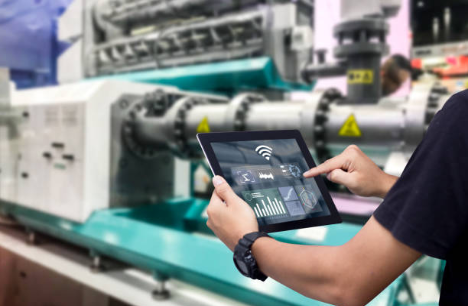
Augmented reality requires the use of a camera, through which a real-time image is captured and combined with an animation.
An application specifically designed for this purpose projects a previously saved 3D image, transforming a physical, real space into a location filled with various virtual elements. To make it easier to understand, see this step-by-step explanation:
Step 1: The first step is to have the camera capture a real object and transmit that information to a software;
Step 2: After receiving the image, the software generates the virtual object;
Step 3: The device, such as a monitor, displays the virtual image overlaid onto the real one, merging the two worlds into one.
Keep in mind that this is just a brief explanation of how the technology works. In practice, augmented reality is far more complex!
20 – Application of This Technology on Mobile Devices
This technology is already being used on various mobile devices, such as smartphones and iPhones. On these devices, it is possible, for example, to access a 3D-projected GPS, such as Route 66.
Furthermore, augmented reality is already being applied in medicine and even in educational settings. Many students are learning with the help of applications that use this technology.
In the entertainment sector, major companies are developing games that unite both worlds — the real and the virtual — bringing immersive possibilities to players.
21 – Open Source Code for Developers Interested in This Technology
It is important to note that augmented reality has an open-source library, meaning developers can create a wide variety of applications for this technology, since it can be built using any programming language.
All of this makes augmented reality even more democratic, being accessible to anyone interested in implementing the technology in their services, regardless of their industry or market segment.
22 – What You Need to Know About Augmented Reality
Augmented reality may seem like a difficult technology to understand, but to simplify it, we have selected the most frequently asked questions about AR and explained its use, origins, and possible applications:
23 – So, What Is This Technology?
Augmented reality seeks to intelligently and digitally integrate the virtual with the real, creating entirely immersive and unique environments. This technology aims to bring new experiences to users.
24 – But When Did Augmented Reality Emerge?
It is believed that augmented reality was born decades ago. As far back as the 1990s, researchers were already implementing this technology and conducting experiments that integrated human beings with the virtual world.
25 – And Why Is Augmented Reality Being Talked About So Much?
In recent years, augmented reality has gained enormous prominence, and this is no coincidence. This technology has been increasingly discussed because smartphones have also evolved considerably over time.
Today, it is very easy to own a phone with a quality camera and a faster processor, and internet coverage has become ever broader, enabling the quick and convenient download of different files.
26 – But Where Can This Technology Be Applied?
Augmented reality is a very versatile technology and can be applied across different segments, such as medicine, real estate, gaming and entertainment, education, and others. It is worth noting that companies that have already created applications using this technology have become success stories in their fields, attracting more customers, inspiring other brands, and serving as a benchmark for them.
27 – And Which Brands Have Already Used Augmented Reality in Some Way?
Many brands have already made use of this technology. Among the best known are Pepsi, Marvel, Coca-Cola, American Airlines, and many more. But in addition to these larger, more established, and traditional companies, smaller and more recent ones are also creating applications based on augmented reality.
28 – But What Will Be the Future of This Technology?
With the continuous advancement of technology, augmented reality tends to become increasingly accessible and, consequently, more present in everyday life, becoming a very common element across the most diverse applications used on a daily basis.