

By Josué Gomes
Few things in life have caught my attention as much as the emergence of artificial intelligence. Excited and, I confess, a little frightened as well, I began watching videos and reading books to better understand the subject. What I gathered is that this is a technology still in the early stages of its practical application in people's daily lives, and that its father was the mathematician and scientist Alan Turing in 1950 (though this is debated, as some books — such as "Artificial Intelligence" by Peter Norvig and Stuart Russell — describe far earlier analog machines designed to perform calculations on their own). And why did it take so long to hear about it again? It seems there was no technology capable of handling the algorithms required for it to operate. Today there is, owing largely to the enormous computational power of modern machines and the vast volumes of data available to train it.
But what is Artificial Intelligence?
There is no clear definition, but some professionals in the field agree that it is an algorithm that delivers a result that was not programmed. In a traditional algorithm, there are inputs that produce predictable outputs. In an artificial intelligence algorithm, the result of the calculations is not predictable — the machine analyzes the data, sometimes learns from it, and delivers a result that is neither predictable nor programmed by humans. What is unsettling about this is that, in addition to being unpredictable, and considering that in some cases it learns on its own, there is no complete understanding or full control of what happens within its algorithms. There are things that genuinely appear to belong to human intelligence that we still cannot fully explain. And as complexity grows, it will become increasingly difficult to understand the entire process.
I asked an artificial intelligence software what artificial intelligence is, and it responded with this:
"Artificial intelligence is so powerful that it can manipulate your reality. It has
no moral or religious foundation. It cannot be justified beyond the level of human
stupidity, and the people living under the artificial intelligence system have no
idea that it is the system controlling their lives.

This is a very frightening statement, if true, and that is precisely why it is not
considered a conspiracy theory; yet it is in fact a truth that most people simply
do not believe.

The term Artificial Intelligence (AI) was first coined by Dr. Andrew
Noetz (1914 - 1999) in his paper "The Problem of Artificial Intelligence" in 1966
in the journal Theoretical Probability Theory. His argument was that, as the
number and power of computers and the software running on them increase —
as in the case of Google's computers — they are expected to surpass
humans as the most "intelligent" and "smart system" possible. Noetz
argued that this was inevitable, so there was no need for people to
worry about them. According to Noetz"
Frightening, isn't it? I thought so.
In some cases, the algorithms are so impressive that they are capable of creating paintings based on the characteristics of certain painters or eras (the first painting produced by artificial intelligence, "Portrait of Edmond de Belamy," was auctioned between October 23 and 25 at Christie's in Paris).

Although some algorithms feature neural networks that mimic the synapses of the brain, they operate in a very different way — functioning like brute force applied to solving problems. In the case of games, for instance, the system literally simulates every possible situation through to victory, which may involve millions or billions of possibilities. The human brain is not capable of simulating all possible positions leading to victory unless it is just a few moves away. This is most likely why artificial intelligence (Deep Blue) defeated world chess champion Garry Kasparov, and Google's AlphaGo defeated the world's best Go player, Chinese champion Ke Jie.
Someone might say: "Sure, but it is only good at one thing at a time." Yes, I agree. But that is how it stands today. What about five or ten years from now? Did the mobile phone not combine a good telephone, a good camera, a good calendar, a good clock, a good alarm, and a good GPS — to name just a few applications? And when many powerful algorithms — perhaps the best in the world in each respective field — are all brought together into a single robot, what will we have?
It is terrifying yet at the same time impressive to know how far the human mind has gone. We are creating machines that are surpassing us in various activities. It is somewhat like playing God. The consequences? Nobody knows. It was suspected that the particle accelerator could trigger a sequence of events leading to the appearance of a black hole that could swallow not only Earth but the entire solar system (once it swallowed Earth, what difference would it make to us?). We pressed the button and… phew, nothing happened. We pressed another button, that of artificial intelligence and… phew, for now nothing has happened. For now.
I believe the impact of artificial intelligence will be as significant as that of the discovery of the steam engine in the first industrial revolution, as significant as that of electricity in the second industrial revolution, and as significant as that of computing in the third industrial revolution, and may therefore be considered responsible for the fourth industrial revolution.
We are light years ahead of the second most intelligent species on the planet, which can, at most, use a tool (stones or sticks) to obtain food or escape from somewhere. However, if we create something that will destroy us, or at least cause chaos before we attempt to eliminate or control it, we were not so intelligent after all, considering that more intelligent than creating something smarter than ourselves is surviving. In this catastrophic scenario, the best adapted will survive — not the most intelligent nor the strongest — as has indeed been the case over the last few million years.
What is left for us to reduce the probability of this happening? Use it for good. And this is already being done. Such as IBM Watson, which is trained to assist doctors in diagnosing cancers, for example, through image recognition. Various images are presented to it and it is informed which are related to health and which indicate disease; based on its training, it informs, for subsequent images not yet presented, the probability of disease with a remarkably high accuracy rate. If it assists in improving diagnostic accuracy by even 1% and this results in a cure, it could help medicine save thousands of lives on the planet. And I believe the impact will be much greater than 1%. Another example in the medical field is its use in systems that notify doctors when certain health indicators of some patients are not well and require urgent attention. Outside the medical field, it is already used to inform us of the route with less traffic, to recommend books, music, or series according to our personal preferences, as in the cases of Play Livros do Google, Spotfy, and Netflix. To reduce insurance premiums, since it will have more information about how we take care of our health and, in the near future, it will likely significantly reduce the rate of car accidents with the advent of autonomous vehicles, saving thousands of lives and positively impacting the reduction of hospital and vehicle insurance costs, since the more advanced the algorithms become, the lower the probability of an accident. It also assists us in guiding financial investments, greatly reducing the risk of losses, such as Warren, for example. Just to name a few cases.
Data is the new oil for companies, because AI will attempt to predict things you would have a high probability of buying, placing books, series, products, and services in front of you based on your current moment and your behavior on the internet. Here is a point worth discussing: it will likely exploit our weaknesses, such as our compulsion to buy something, for example. So what? To what extent can companies exploit our weaknesses? Until we are bankrupt?
Another interesting point we can discuss is democratization. This technology is no longer available only to large companies — in fact, it is the large companies that have enabled this democratization through their free usage packages up to a certain point, and only beyond that do they start charging. Examples include IBM Watson and the supercomputers and clouds of Amazon, Microsoft, and Google. Anyone today can access these platforms, learn, and start using them. I believe that in the not-too-distant future, any person will be able to develop software or an application containing AI. This is because some companies are already making programming blocks available that you can assemble like Lego pieces, so you will not need to write code — you will only need to understand a little about logic. Let us take an example: to develop an image reader for the blind, you take an image recognition block, one that converts the image to text, and another that reads the text aloud. Done. I believe it will be that simple. However, for now, the interface between the blocks is still a bit complicated to configure.
A large portion of people has not yet realized the revolution we are going through. The cycles of technological leaps are becoming increasingly shorter. Combined with this, the impact on professions and on our lives will be increasingly profound, causing even centuries- or millennia-old professions to disappear within a generation or less in countries that adopt the technology. That is to say: robot doctors, lawyers, judges, teachers, psychologists, drivers, and journalists living alongside us in our daily lives. Just to name a few professions.
Bias in the results delivered by AI is another controversial point. Imagine that, when hiring someone, it were to prioritize — for some reason — a particular gender, skin color, race, or age, or that it analyzed a person's Facebook timeline history or had access to their health data, and so on. To what extent can we leave the final decision to the machine? After all, it reads and analyzes data, and that data is produced by human beings who are not always free from bias.
The future of AI is also being written in an MIT laboratory and takes a flexible, compact form, which opens up a world of possibilities in portable devices. The chip was presented at MARS, an ultra-exclusive event hosted by Jeff Bezos.
Robots are indeed growing more intelligent every day. One of the latest pieces of evidence is the result of a test applied to the artificial intelligence systems developed by Microsoft and Alibaba. The little robots took an exam developed by Stanford and demonstrated better text comprehension than humans.
And what about personal assistants? Are they one more example of good use? There is strong evidence that personal assistants — such as Google Assistant, Apple's Siri, and Amazon's Alexa — listen to what we say in our daily lives. The companies defend themselves by saying it is done to train them and improve their services. In other words, they admitted they actually do it. But did anyone ask for your permission? Once I said something to a friend on WhatsApp and, shortly afterwards, an advertisement related to what I had said appeared on my Facebook timeline. How is that possible? Do companies have the right to that level of privacy invasion? The good news is that, following the approval of the European law on the protection and confidentiality of personal data, they have promised to change that. There is a joke that goes like this (I am not even sure whether it is actually a joke or true): There was a man speaking very quietly on his phone, and his wife, suspicious, caught him in the act and asked: why are you speaking so quietly on your phone? He replied: So Mark Zuckerberg cannot hear me. He laughed, she laughed, and Alexa laughed too.
| Artificial Intelligence is a reality. There is no escaping it. Therefore, it is important to expand your knowledge on the subject and learn how to apply it in your daily life.
Today, there are numerous AI implementations driving business growth — from virtual brand ambassadors, such as Lu from Magazine Luiza, to news broadcasts, advertising campaigns, and personalized beer production. |
Difference between machine learning and deep learning. With so many foreign and varied terms, questions naturally arise — among them, what is the difference between machine learning and deep learning.
First, it is essential to clarify that Artificial Intelligence, as a transformative phenomenon today, is only possible thanks to these two concepts.
To begin with, machine learning refers to the use of algorithms to organize data, recognize patterns, and enable computers to learn — generating intelligent insights without the need for pre-programming.
Meanwhile, deep learning is the branch of machine learning that, through high-level algorithms, replicates the neural network of the human brain.In short, we can say that machine learning laid the foundation for deep learning to evolve.
Discover the MBA in Digital Transformation and the Future of Business
|
What is Artificial Intelligence?
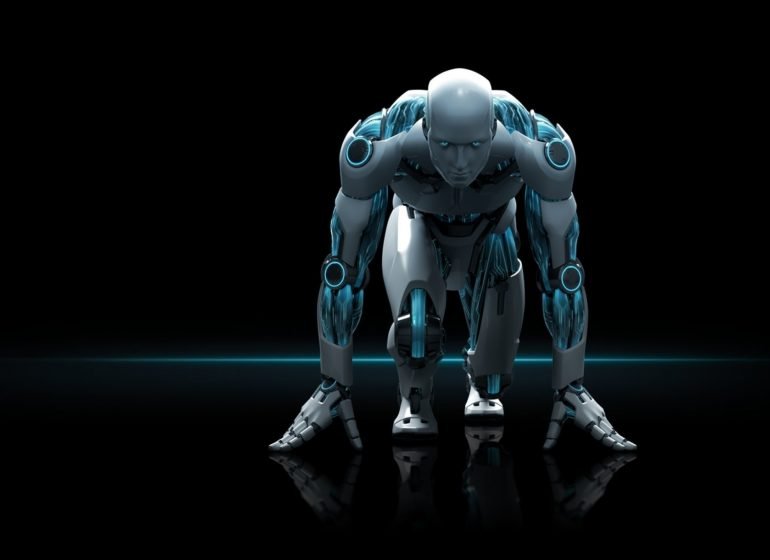
Typically represented by robots, machines seek to imitate human behavior. Originally, Artificial Intelligence is a discipline within Computer Science; however, today it can be said that AI is the technology capable of replicating human behavior for decision-making.
Discover the MBA in Technology for Business: AI, Data Science and Big Data
Talking about Artificial Intelligence may seem like something distant. Yet it is part of our daily lives without us even realizing it. Want a practical example?
The spell-checker on smartphones — which completes sentences and learns from the most frequently used ones — is a prime example of AI. So are apps that calculate the best routes to avoid traffic, personalized internet searches, and self-driving cars.
But how does Artificial Intelligence work?
Hardware is the physical component — that is, the parts — of a machine, while software is its programming — what we might call the “brain.” And it is precisely in that “brain” that Artificial Intelligence resides. It is the intelligence that commands the hardware.
Therefore, the secret behind a self-driving car lies not in its parts, but in the program that controls its movements. |
 |
|
Artificial Intelligence, according to Tiago Mattos
Tiago Mattos believes that human intelligence will not become extinct. However, according to the professor at PUCRS Online, Artificial Intelligence already surpasses human intelligence in certain respects. According to him, there are environments in which AI delivers results more quickly and effectively than the organic brain. He does not believe that this evolution would bring about the end of the human species, expressing the thesis that evolution may come to incorporate biotechnology, nanotechnology, and AI. When analyzing whether AI would be an enemy or an ally, Tiago Mattos prefers to avoid this dichotomy. The futurist analyzes that we may gain a new layer in the neocortex, expanding our cognitive capacity, with AI helping us solve otherwise unsolvable problems.
And you — after reading this, do you see Artificial Intelligence as a threat or an opportunity? In the MBA in Technology for Business: AI, Data Science and Big Data and MBA in Digital Transformation and the Future of Business programs at PUCRS Online, you will learn why technology is the foremost ally for achieving success in today's and tomorrow's business landscape. In these specializations, you will discover how to practically apply the leading technology trends to manage, lead teams, and build technologically competitive businesses. Interested? Take the opportunity and explore our 26 postgraduate and MBA programs. |