

They say the year only truly begins after Carnival.
Many leaders and executives are beginning to think about strategies and challenges not only for the coming year, but for the next decade.
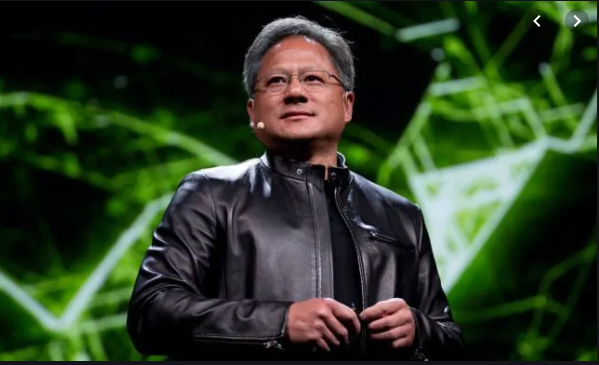
In the meantime, take a look at this still-relevant analysis of the Top Best-Performing CEOs in the World in 2019.
It may bring important insights for your business throughout this year. And believe it or not: many executives and business owners never even glance at these lists — but they should.
The research was conducted by Harvard Business Review and included more than 883 CEOs from 876 companies (some companies had co-CEOs).
The Top 5 Best CEOs in the World in 2019 were:
1 — Jensen Huang (Nvidia)
2 — Marc Benioff (Salesforce.com)
3 — François-Henri Pinault (Kering)
4 — Richard Templeton (Texas Instruments)
5 — Ignacio Galán (Iberdrola)
The top-ranked CEO on the list (Nvidia) was also one of the company's founders.
The company was founded in 1993 with a single objective: to build powerful chips capable of rendering high-speed graphics for video games.
Even as the gaming industry grew through the 2000s, Jensen Huang saw a different path: he spent billions of dollars on R&D to develop chips compatible with Artificial Intelligence applications.
Suddenly, autonomous vehicles, robots, drones, and dozens of other tools were running on Nvidia chips. Between 2015 and 2018, the company's stock soared 14-fold.
Now, why are more "famous" CEOs like Jeff Bezos (who didn't even appear on the list), Elon Musk (also absent from the list), and Tim Cook (ranked 62nd) not among the top positions?
There were 3 evaluation criteria:
Financial Ranking: which encompasses total shareholder return, industry-adjusted TSR (Total Shareholder Return), and change in market capitalization.
SUSTAINALYTICS Ranking: analysis of non-financial issues, such as social, environmental, and governance matters (ESG);
CSRHUB Ranking: a compilation of more than 600 ESG data sources, including companies leading in these indicators and companies seeking to improve their performance across these criteria.
The simple fact that 2 of the 3 indicators analyzed have no direct relation to money — but rather to issues larger than that — signals a strategic shift in how the market will assess the role of leaders and CEOs going forward.
Today, a CEO's role is no longer simply about generating profit. They must deliver results sustainably and cannot afford to neglect environmental or social issues.
Perhaps this explains cases like WeWork's CEO, Adam Neumann, and other major company leaders losing their positions in recent years…
Customer and shareholder expectations have shifted along with the market — it is only natural that these changes also affect the leadership of these companies.
Whether you are currently a CEO within a company, hold an executive or leadership position, or are pursuing a CEO role yourself, it is time to prepare for your future shareholders and board members — and for the new demands of the market and your future customers.
Unfortunately, this kind of preparation is not available in MBAs or conventional educational institutions.
It is found in day-to-day experience within companies, in conversations with other leaders, and in learning from those who are truly driving change.
At the StartSe Executive Program, we bring together CEOs, Leaders, and Executives from various industries for 3 consecutive days to collectively prepare their companies for the challenges ahead.
We will share with you the best practices that a new leader or CEO needs to reinvent their company in the coming years, and present tools and frameworks to overcome the obstacles your business will face in 2020.
Here are some of the topics we will cover in the next Executive Program cohort:
New Technologies
— The framework for understanding this New Technological Era;
— Discover all the New Technologies and the impact each one will have on your business;
— The "3 Horizons" as a strategy for understanding and protecting yourself from the gradual and sudden ways companies fail;
— What is Artificial Intelligence and how can you apply it in practice?
New Markets
— Reassess the "battlefield" you operate in and develop new business strategies to compete against players from emerging markets;
— Customer Centricity: how to ensure customer success and turn them into brand advocates?
— If you could start your company from scratch, what would it look like? The startup approach to building businesses;
— New Marketing: how to acquire new customers and grow your revenue;
— Why, when, and where to innovate?
New Management
— Practices for renewing, building, and engaging top-tier teams within your company;
— Partnership: how to align interests and manage a dynamic, evolving business partnership;
— What does it mean to be an Executive in this New Economy?
— Specific and practical lessons on competing in the New Economy.
This will be a 3-day immersion where we will share all of this with just 30 participants. Secure your spot before the next cohort fills up.
For more information and to secure your spot,
