

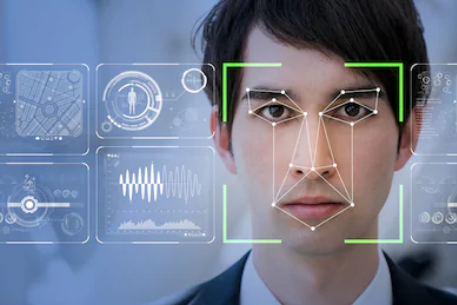
Facial recognition is no longer a technology confined to science fiction films.
China is already using it to replace subway tickets, as a payment method, and even to take student attendance in the classroom.
The United States, meanwhile, uses the same technology to identify passengers at airports. And Brazil uses it for everything from payments to identifying drivers entitled to access parking facilities.
Here in Brazil, Sem Parar, an automatic payment company for tolls and parking lots, announced it is testing facial recognition.
Starting in September, customers will be able to enter — and pay — at the parking lots of Morumbi and Iguatemi shopping centers simply by showing their face at the entry and exit booth.
Until now, the company provided stickers with codes for each customer, which were read at the barriers.
In addition to Sem Parar, Pão de Açúcar is another company betting on the technology. The supermarket chain plans to open stores with facial recognition and self check-out.
Gol wants passengers to be able to board flights in Rio de Janeiro simply by scanning their face. Could this spell the end of check-in?
The investment is not limited to the private sector — public institutions are also embracing it. The São Paulo Metro will implement a facial recognition system to identify fugitives, missing persons, and unaccompanied children.
The initiative is similar to one carried out by the Public Security Secretariat (SSP) of Bahia — since carnival, 40 individuals have been identified with the aid of the technology.
It is still too early to tell where facial recognition is heading. This is the type of technology whose outcomes depend entirely on who is wielding it.
Microsoft President Brad Smith fears it could be used for excessive government surveillance.
The citizens of San Francisco, in the United States, share the same concern and, for this reason, banned the use of facial recognition by the city government.
In China, this is already a reality — with police officers at train stations wearing facial recognition glasses. The same technology has also become a tool for public shaming, as in the case of a Chinese executive who was publicly exposed for something she did not do.
Source: Startse