

If you know anyone born between the early 1980s and the late 1990s (Millennials or Generation Y), there is something neither the government nor they themselves want to admit: they are screwed, very screwed.
While Brazil celebrates the "leap" of 0.4 percent GDP growth in the quarter, everyone is crossing their fingers hoping the situation does not worsen and the number of unemployed does not rise (we have already reached 13 million).
Recession has never been good for anyone. Do you remember 2008, when we went through a global crisis?
In the US, Millennials were hit hard by that major crisis (2008) and have not fully recovered from it. Experts point out that this could be, in the US, the first generation in modern history to end up worse off than their parents.
And the cause was not just the 2008 crisis — it started much earlier…
Those who do not learn from History…
In the 1980s, the US went through a crisis, primarily because it failed to respond to new international competitors that were emerging — such as Germany and Japan — taking market share from Americans both domestically and abroad.
This caused Generation Y to enter the worst job market in 80 years. An entire decade of lost wages.
The impacts are still felt today. In 2014, Millennials were not economically better off than the previous generation (X) and were still 10 percent worse off than the Baby Boomer generation (born between 1945 and 1965).
All of this despite the current economy being wealthier and more technologically advanced than its predecessors.
As the job market deteriorates during crises, the generation that lives through it tends to accept anything just to survive. Those who go to college take on student debt that many cannot repay. And when they graduate, they cannot afford to buy property, since they need to work to finish paying off their student loans.
Owning property may seem very old economy, but it remains a way to build wealth. If you doubt this, simply look at previous generations: after all, they are often the landlords of the homes and apartments rented by Millennials.
In Brazil the situation is quite similar. While previous governments saw a boom in income growth among Millennials in the lower-middle classes, since 2014 that growth has turned to dust.
Today there are 13 million unemployed, some having been out of the active workforce for over 2 years. And when they return, they will likely earn less than they did before the crisis.
The real estate market boom was also not captured by a large portion of Brazilian Millennials, even with low interest rates.
Brazilian student debt has also increased: 3 in every 5 students who used FIES (Student Financing) were in default in 2019.
That amounts to 13 billion reais in debt.
When the numbers are crunched, Generation Y is worth less than previous generations. Their net worth is 20 percent lower than their grandparents' (Baby Boomers) and 40 percent lower than their parents' (Generation X).
While the Baby Boomer generation occupies the highest (and best-paid) positions in companies and holds more wealth, cars, and property, Millennials are faring worse than their parents, according to Credit Suisse.
In Brazil, professionals between the ages of 40 and 64 earn nearly 30 percent more than professionals between 18 and 39. For those over 65, this gap rises to 38.9 percent relative to the younger cohort.
Institutions such as the IMF and the World Bank recently lowered their global economic growth forecasts. This, combined with the US-China trade war and the impact it will have on countries dependent on those economies, suggests we are approaching another Global Crisis.
A new crisis will drive up unemployment, and lower wages will force Generation Y to wait even longer to accumulate wealth, secure good jobs and salaries, escape renting, and even start families and have children.
In Brazil, on top of all this, there is the unresolved Pension Reform, investors who have not returned to invest here, China — our largest trading partner — prepared to buy less from us if we do not act sustainably, and the Amazon crisis causing international friction with other nations.
None of this impacts only this generation. There is evidence that global growth and development as a whole would be better and faster if Millennials could buy homes, start families, launch businesses, and spend like other generations did.
All of this certainly puts us on high alert. However, there is an even more important warning sign emerging: if everything already makes Generation Y the least prosperous so far, what will become of Generation Z?
Can Millennials turn things around?
Despite everything you have read above… yes, they can. The current economic landscape may not be working in their favor, but one simple characteristic of Millennials — not typical of past generations — has the potential to completely change the game.
We are talking about the ability that most of these young people have to stay on top of all the technological innovations that will impact (and are already impacting) the world and the future of work.
While many Baby Boomers still show a certain "resistance" to engaging with these topics, believing they will not be affected by such changes, the Millennial thinks differently.
They know the trends. They understand how technology will impact their career and they know that, if they are not aware of it, they will be left behind.
One of these innovations — the one that probably deserves the most attention right now — is the concept of Artificial Intelligence, which is the only current development with the capacity to transform absolutely every market:
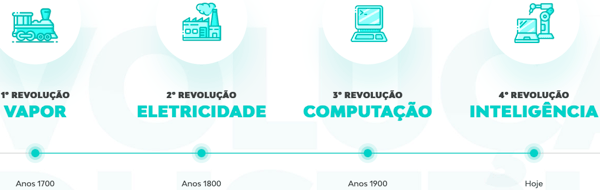
And while many companies seek Artificial Intelligence for their businesses, few truly understand how it works…
Most offer Process Automation while mistakenly thinking it qualifies as Artificial Intelligence, but A.I. is far from being just that.
Is hiring Millennials a good idea?
The Deloitte Global Millennial Survey 2019, a study conducted across all 6 continents, showed that Millennials and the so-called Generation Z are more disillusioned and pessimistic than ever regarding their personal lives, professional lives, and the world at large.
A total of 13,416 Millennials from 42 countries and 3,009 Generation Z members from 10 countries were interviewed. The Millennials included in the study were born between January 1983 and December 1994, while Generation Z members were born between January 1995 and December 2002.
Some of the data below may be concerning if you are a business owner or recruiter:
— Top Ambitions: 57 percent of Millennials said that traveling is their greatest desire, followed by achieving financial prosperity (52 percent), owning their own home (49 percent), making a positive impact on society (46 percent), and starting a family (39 percent);
— Pessimism: only around 26 percent expect their country's economy to improve in the next year. More than 50 percent believe their financial situation will worsen or stay the same in the following year;
— Resignation: in addition to 49 percent of Millennials stating they would leave their jobs within 2 years, 25 percent say they have already done so before. Only 28 percent said they would stay at the same company for at least 5 years. The main reasons cited by young people for leaving their jobs include: dissatisfaction with benefits, lack of a career plan and opportunities for professional development, among others.
And the figure that most deserves business owners' attention: 50 percent of the young people surveyed said they are considering joining the “Gig Economy“, meaning working as freelancers or independent contractors. According to the survey, the main reasons for this are the chances of higher earnings, greater flexibility, and a better work-life balance.
Knowing that the desires and needs of Millennials — who are the professionals of the future — are completely different from those of other generations, what can you do to attract and retain this talent at your company?
This is, most likely, the greatest challenge facing managers today. After all, every business depends on the people within it. Remember: you do not build a company — you build a team, and the team builds the company.
The solution that we at StartSe found for this lies in a Partnership model that has already been applied and validated at companies such as XP Investimentos, which today has more than 1,700 employees. We have been replicating this same model here at StartSe for 4 years, and the results we have achieved year after year are:
— Employees delivering the best possible results within their area of expertise;
— People who work as if they were owners of the company, without needing anyone to hold them accountable;
— An excellent organizational culture, with everyone happier because they have freedom, flexibility, and fair bonuses (everything Millennials desire);
— Exponential profits for our business (we have already grown 25 times in size over these 4 years of existence!)
And the only secret to this is that we are simply replicating a model that has already been tested and validated at other successful companies.