

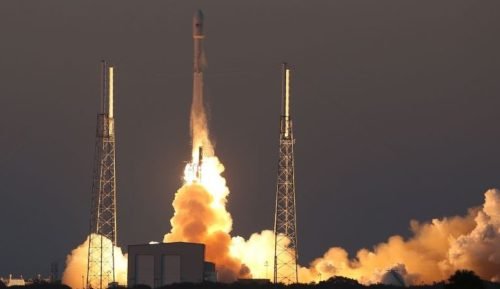
SpaceX launched its fourth batch of Starlink satellites into orbit on Wednesday morning. The goal of the Starlink constellation is to provide reliable and affordable internet access to every part of the world.
Used for the third time with this launch, the Falcon 9 rocket core carried 60 additional Starlink satellites into low Earth orbit (at an operational altitude of approximately 550 km).
The booster then gracefully returned to Earth, landing on the Of Course I Still Love You (Autonomous Spaceport Drone Ship) in the Atlantic Ocean. This Starlink mission is the second of 24 planned launches in 2020, in pursuit of the company's ultimate goal of reaching 1,584 satellites in orbit by the end of the year.
Within a decade, we may no longer need traditional WiFi. Companies, universities, and municipalities will be able to create their own 5G cellular networks supporting billions of connected IoT devices and sensors across their respective regions.
Today, cellular networks cost more due to subscription fees and radio installations. However, SpaceX Starlink satellites are set to drive down those prices with affordable 5G connectivity.
New spectrum auctions are already underway, such as the Citizens Broadband Radio Services (CBRS) auctions planned for June in the US.
The next step: developing roaming plans to allow devices to seamlessly connect to these local networks.
Even if Wi-Fi is not entirely eliminated, the costs of low-data cellular contracts will undoubtedly decrease in the coming years, thanks to large-scale satellite projects such as Starlink.