

An avatar is a version of yourself in the virtual world. The possibility of this digital version of you has existed for a few decades. It emerged in the video game industry and was popularized by websites that replicate a virtual world, such as Second Life.
Today, we can use virtual reality glasses to teleport our eyes and ears, and a set of mechanisms that you wear or put on to teleport your sense of touch. This is possible because, when something touches you in the virtual world, these mechanisms will apply pressure compatible with that touch, making the sensation of truly being in that environment even more immersive.
As interactions increase, before long we will even forget that we are embodied within an avatar, and our sensations will become increasingly realistic, with stronger responses from the brain.
As you move in the real world, your avatar follows your movements in the virtual world.
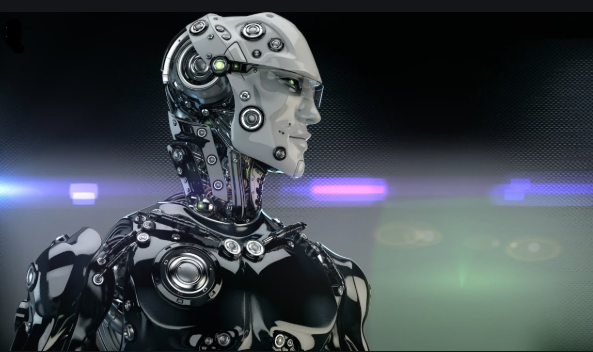
Robots are the second form of avatars — physical avatars. Imagine a humanoid robot that you can pilot. You could rent one at any store anywhere in the world and walk the streets, exploring the location. You could assist your country's military if you are a reserve soldier or have some form of disability, when robots exist for that purpose — and that day is not far off. You could contribute to humanitarian missions without risking your life or health, and without being away from your family. Speaking of family, you could place a robot in your parents' home if they are elderly, and help them quickly whenever they need it — at any hour of the day and from thousands of kilometers away. These are just a few examples.
By combining virtual reality glasses with a special suit that transmits the sensation of touch, you can teleport your senses into that robot. This allows you to walk, shake people's hands and feel that handshake through your glove, perform surgeries remotely if you are a surgeon, assist a doctor if you are a nurse, and save lives in the event of fires or shootings — all without leaving home.
And, just like the other technologies we have discussed here, this future is not far away.
The $10M ANA Avatar XPRIZE project aims to develop a robot capable of replicating your movements in dangerous locations, in places that would take too long to reach when time is critical, or for activities that require more strength than a human can or should exert, for example. Watch the video:
These more sophisticated robots have not yet arrived, but a simpler version already exists — the Newme, recently announced by ANA. With it, humans can virtually explore new places and interact with other people. The robots are colorful, with wheeled bases similar to the Roomba and eye-level cameras that capture the surrounding environment and transmit it to virtual reality glasses or a computer screen.
After unveiling the technology at the Tokyo Advanced Technology Expo in October, ANA announced plans to deliver 1,000 Newme units by 2020.
This robot is not just for entertainment — you can also use it to deliver a lecture, for example, from the comfort of your living room, avoiding the entire journey to the city or country where the physical event is taking place.
When more sophisticated avatars arrive, geography, distance, and cost will no longer limit our travel choices.
From attractions such as the Eiffel Tower or the pyramids of Egypt, to otherwise inaccessible destinations like the Moon, Mars, or the Mariana Trench, we will be able to transcend our own physical limitations through avatars that walk, fly, or dive.
The exploration of the world and outer space will gain a new frontier: that of imagination and the desire to discover.