
AI and the future of health
One of the beautiful things about humans is that all 8 billion of us on the planet are almost biologically identical.
This means that something that works for one person in India, Iraq, or Mexico can also work for someone else in San Francisco.
For Emad, one of the keys to bringing high-quality healthcare to more people is increasing information density and organized knowledge.
He told me the following story about his son to illustrate this point:
“When my son was diagnosed with autism, they said there was no cure, no treatment. So I had to build an AI system to analyze all medical clinical trials and perform a first-principles analysis to understand what might be causing it… and then we did drug repurposing to improve the symptoms.”
This capability should be available to everyone!
What many people don't realize is that every time an AI learns something, it shares what it has learned with all other existing AIs.
While humans stagnate in our understanding and knowledge after a certain point, as we update these large language models (LLMs) and generative AI tools, they are getting better and smarter.
Emad points out that when you use tools like ChatGPT based on the GPT-4 language model, that is just one model.
Imagine if there were 100 large language models, all updating and cross-checking each other. And then 10 of those models were dedicated to learning everything about you and how to increase your healthspan.
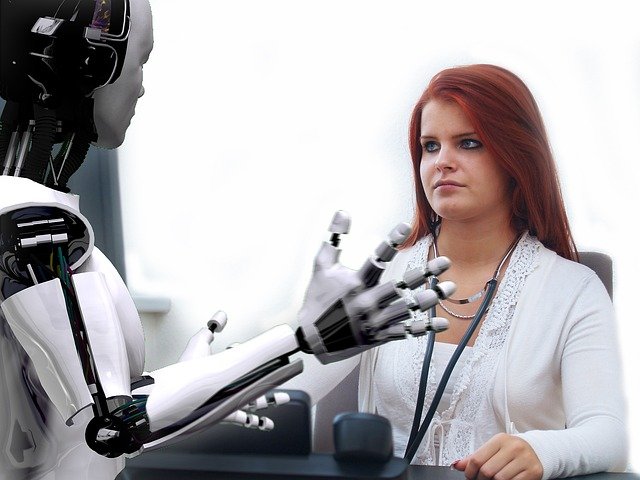
In a not-too-distant future, the world's best diagnosticians will be AIs, and the best surgeons will be AI-driven robots.
That is how we create an abundance of health globally.
Text by Peter Diamandis
I asked ChatGPT what the impact of AI on medicine will be, and this is what it said:
Artificial intelligence (AI) has the potential to significantly transform medicine across several areas. Some of the key applications and impacts of AI in medicine include:
Diagnosis: AI can analyze medical images (such as X-rays, CT scans, and MRIs) and clinical data to identify patterns and assist in diagnosing diseases with greater accuracy and speed than conventional methods.
Personalized medicine: AI can help develop personalized treatments based on the patient's medical history, genetics, and lifestyle, improving treatment efficacy and reducing side effects.
Drug discovery: AI can accelerate the process of discovering and developing new drugs by analyzing large amounts of data and identifying promising compounds more quickly and at lower cost.
Surgical assistance: AI-assisted robots can increase precision and reduce risks in surgeries, as well as enabling surgeons to perform complex, minimally invasive procedures.
Disease monitoring and prevention: AI can be used to monitor vital signs and other health data in real time, helping to predict and prevent diseases before they become serious.
Population health management: AI can analyze large health datasets to identify trends and patterns at the population level, helping to inform public health policies and strategies.
Telemedicine and medical chatbots: AI can enable the creation of medical chatbots and telemedicine systems that offer virtual consultations, increasing access to healthcare and reducing the burden on health systems.
Administrative efficiency: AI can automate various administrative tasks in the healthcare sector, such as appointment scheduling, electronic medical records management, and insurance claims processing, reducing the workload of healthcare professionals and improving system efficiency.
Although AI offers many potential benefits in medicine, there are also concerns and challenges to be addressed. These include ethical issues, data privacy, algorithmic bias, the need for better integration with existing health systems, and the potential for unemployment in the sector. It is essential to address these concerns and ensure that AI is used responsibly and ethically to improve health outcomes for everyone.
My opinion on the impact of AI on medicine
The truth is that doctors will be replaced. Imagine an AI delivering a more accurate diagnosis and prescribing a more effective treatment. Once the news spreads, who would you rather consult?
It is not hard to understand — an AI can read every scientific article in the world in near real time, perform a meta-analysis of them, and propose the best possible treatment. No human being is capable of reading every scientific article in the world, let alone in near real time.
But what about the subtleties? The eye contact? In that regard, for now, human beings have an advantage — but it won't be long before those “subtleties” are translated into data and humans are disrupted in those skills as well.
I know it sounds too bad to be true. I know the words are harsh, but we cannot ignore the issue. I invite everyone to reflect on it. And what about those who have children currently studying or planning to study medicine? Honestly, I don't know what will become of them — when they will be discarded by healthcare systems, whether it will take 5 or 10 years. But it is almost certain that they will become obsolete. They will need to reinvent themselves, just like people in hundreds of other professions.
Wow! But a medical degree is extremely difficult to complete. Yes, it is — but what can you do? The human survival instinct and love for our children will lead us to the “selfish” act of doing what is best for ourselves, with no regard for the young person who studied 6, 8, or 10 years.
After commercial airplanes were invented, no one wants to travel by ship to another country anymore. It no longer makes sense.
After the car was invented, no one wants to ride a horse to another state anymore. It no longer makes sense.
After AI and robots start saving more lives than humans… (complete the sentence).