
At 25, David Fajgenbaum was a former college athlete and medical student determined to become an oncologist — in memory of his mother, who had died of cancer a few years earlier. Then he himself fell ill. The diagnosis was a rare condition, Castleman disease, in which the immune system attacks and shuts down your own vital organs. Within three years, he nearly died five times.
Saved by a drug that already existed
With no treatment that worked, David became his own researcher. He discovered that his disease was driven by the hyperactivation of a bodily pathway called mTOR — and decided to test on himself an existing drug that inhibits it (sirolimus, also known as rapamycin), originally used for other purposes. Since January 2014, he has been in continuous remission: more than twelve years now.
That planted a powerful question: if a drug created for one disease could save someone from a completely different one, how many cures are hidden inside the medicines we already have?
Every Cure: AI to repurpose what already exists
To answer that at scale, David founded Every Cure, a nonprofit with an audacious mission: use artificial intelligence to find every possible use of every already-approved drug, for every known disease.
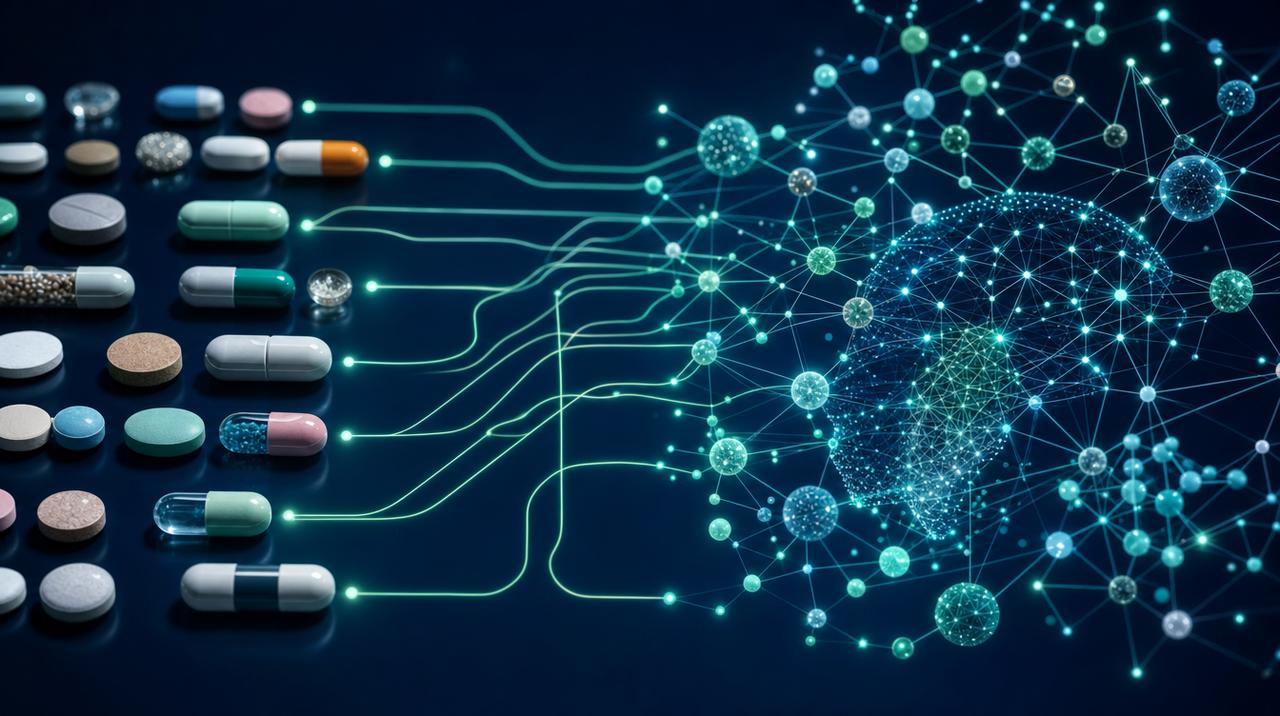
The method is ingenious. The AI is trained on biomedical knowledge graphs — vast maps gathering everything humanity knows about every drug, disease, gene, and protein. The model learns what a good “drug treats disease” relationship looks like, then generates a score for every possible pairing. Instead of years of trial and error, the machine points scientists to the most promising pairs to investigate.
A dentist’s anesthetic against cancer
One finding captures the potential: lidocaine — that common anesthetic from the dentist’s chair — was flagged by the AI as a possible ally against breast cancer. Applied around the tumor minutes before surgery, it may reduce the risk of metastasis. It’s a cheap, generic drug, available for decades — whose new use was, quite literally, hidden in plain sight.
David’s ambition sums up the shift: today we can predict, with AI, which drug might serve which disease; as the technology advances, the goal is to reach the “right drug for every person.”
The lesson for any business
Behind the medicine lies a principle that applies to any company: AI is extraordinary at finding hidden value in what you already have. It’s not only about inventing something new, but about seeing new uses, new connections, and new opportunities within your data, your customers, and your current resources. That’s the lens we help your business put on.
Content based on Peter Diamandis’ newsletter. Read the original and follow his work at diamandis.com. This information is for educational purposes and is not medical advice.