

When Keller Cliffton told his first ten employees that the company they were building had about a 1% chance of success, he meant it. What he couldn't have predicted was that Zipline would go on to save 17,000 lives a year, fly more than 230 million kilometers autonomously without a single safety incident, and become the largest commercial autonomous system on the planet. Nearly every expert said it was impossible. He thought differently.
What Zipline does
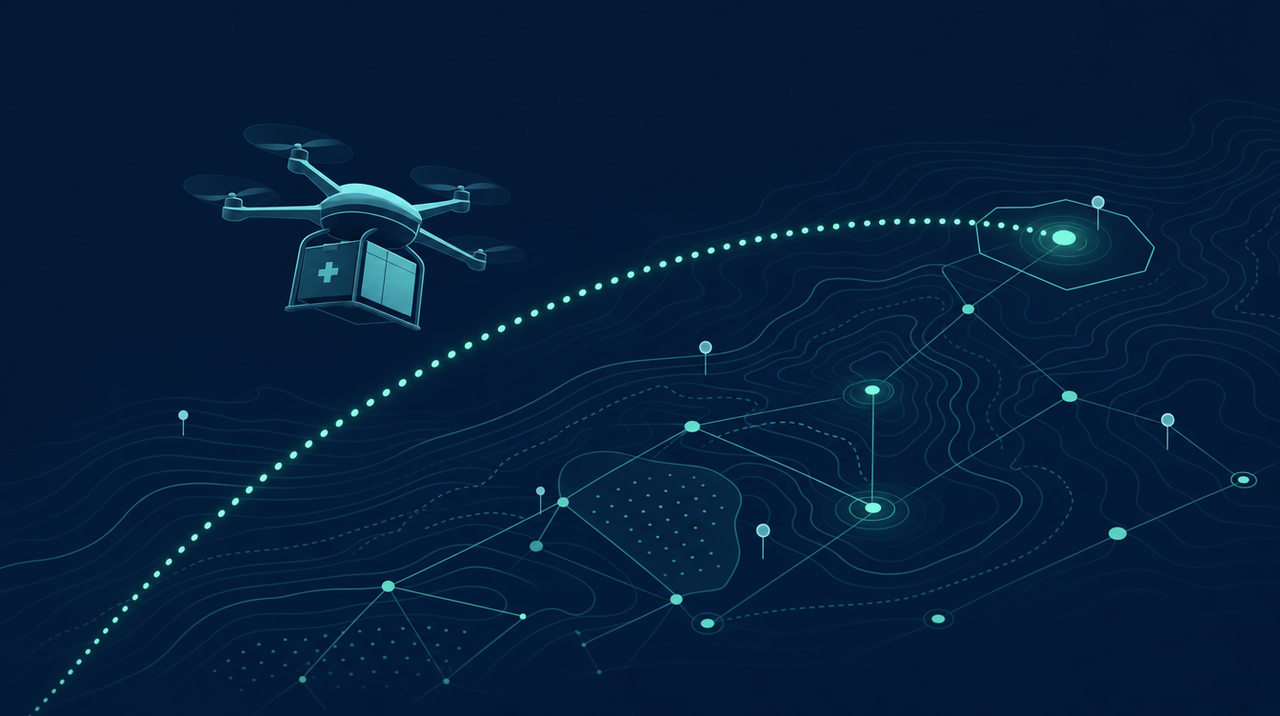
The idea is deceptively simple: use autonomous drones to deliver urgent medical items — bags of blood, vaccines, medicine — to places where a bad road or a flood can cost hours a patient doesn't have. A health worker places an order, the drone takes off from a distribution center, flies itself to the destination and drops the package with precision. What once depended on an ambulance stuck in traffic now happens through the air, in minutes.
The numbers that stand out
What makes Zipline remarkable isn't the drone itself, it's the scale combined with reliability. 17,000 lives saved a year. More than 230 million kilometers flown autonomously, without a single safety incident. The largest commercial autonomous system in operation in the world. It's not a lab pilot or a promise for 2040 — it's infrastructure working now, every day, in regions traditional logistics never served well.
"Everyone said it was impossible"
Zipline's story isn't only about technology; it's about building despite the "it won't work." That 1% chance wasn't false modesty — it was the honest picture of a hard problem, with complex regulation, expensive hardware and no guarantees. The difference between the idea that dies on the slide and the one that saves thousands of lives is rarely the size of the plan. It's the willingness to start and solve one real problem at a time.
What this has to do with your business
You probably won't build a fleet of drones — but the lesson applies to any company. Autonomous systems and artificial intelligence are no longer science fiction: they already operate at scale, reliably, solving concrete problems. If autonomous technology can safely deliver blood in minutes, then automating a customer's first contact, organizing data that gets lost today, or handling a repetitive task that eats up hours of your team's time is far closer than it seems. The question is no longer "is this possible?" but "where do I start?".
Post inspired by an edition of the Metatrends / Abundance newsletter, by Peter Diamandis (founder of XPRIZE and Singularity University), about Zipline's journey presented at the Abundance Summit. Worth following at the source: diamandis.com.