

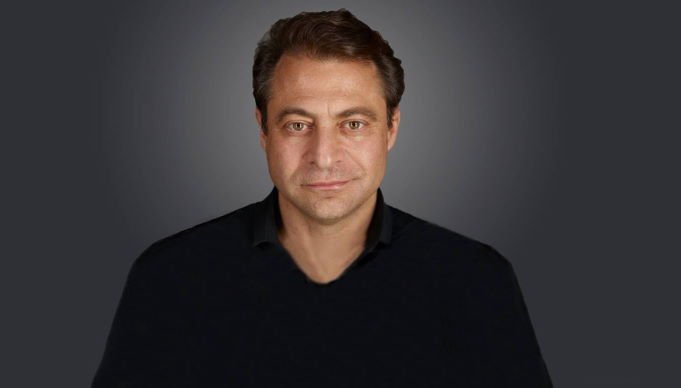
A World of Abundance According to Peter Diamandis
Creating a world of abundance is not about creating a world of luxury, but rather a world of possibilities.
But how exactly do we create this world?
Today we will explore a powerful concept called “the adjacent possible.”
This is the wonderful term coined by theoretical biologist Stuart Kauffman, who says that for every myriad of paths unlocked by each new discovery, there is an enormity of hidden universes. And this can occur even within something as simple as an idea.
Abundance is one of those simple ideas.
And its time has come.
It is up to bold, exponential entrepreneurs around the world to unlock this adjacent possible and help humanity live up to our fullest potential.
In today’s blog, I will discuss what the adjacent possible is, why it is more relevant than ever, and how it can help us fulfill the promise of a truly abundant future – for everyone.
Let’s dive in…
WHAT EXACTLY IS THE ADJACENT POSSIBLE?
Before the invention of the wheel… the cart, the carriage, the automobile, the wheelbarrow, the roller skate, and a million other offshoots of the invention’s adjacencies were unimaginable.
But once the wheel was invented, an avenue of possibilities opened up.
This is the adjacent possible.
It is the long list of first-order possibilities that opens up whenever a new discovery is made.
And our path of adjacent “possibles” has led us to a unique moment in time. We wander through a world where the expansive nature of technology has begun to connect with our inner desires.
As technologist Kevin Kelly explains:
“For most of history, the unique blend of talents, skills, insights, and experiences of each person had no outlet. If your father was a baker, you were a baker. As technology expands the space of possibilities, it increases the chance that someone can find an outlet for their personal characteristics… When we expand the variety and reach of technology, we increase options, not just for ourselves and not just for others alive today, but for all generations to come.”
More than 50 years ago, Abraham Maslow pointed out that people whose basic needs were not being met had little time to devote to self-actualization.
If you are trying to feed yourself, find medicine for your children, or survive similar threats, then living a life of possibilities is not very likely.
But it is precisely here, as economist Daniel Kahneman discovered, that the adjacent possible finds its path to abundance and produces spectacular leverage.
THE ADJACENT POSSIBLE AND THE PURSUIT OF HAPPINESS
Several years ago, Kahneman set aside the question of cognitive biases and turned his attention to the relationship between income level and well-being.
By analyzing the results of the Gallup-Healthways Well-Being Index, which asked approximately 450,000 Americans what brings them joy, he discovered, as the New York Times aptly put it: “Maybe money does buy happiness after all.”
The key word here is maybe.
What the data shows is that a person’s emotional satisfaction keeps pace with income – as income rises, well-being increases – but only up to a point. Before the average American earns $75,000 per year, there is a direct correlation between money and happiness.
Above that number, the correlation disappears.
This tells us something interesting: that in the United States, the freedom to flourish – to truly enjoy a life of possibilities – costs approximately $75,000 per year (in 2008 dollars).
But what really matters is what that money buys.
A typical analysis of American spending shows that 70% to 80% of the money we earn goes toward meeting basic needs such as water, food, clothing, shelter, healthcare, and education.
That number rises to over 90% in many developing countries.
But in our abundant future, the dollar goes further. The same is true of the yen, the peso, the euro, and so on.
This happens because of dematerialization, demonetization, time savings, and a thousand other reasons.
So you may ask: what does it take to make a real difference?
Not much, it seems.
Daniel Kahneman’s calculation has been extended to the rest of the planet. On average, worldwide, the point at which well-being and money diverge is approximately $10,000.
That is how much the average global citizen needs to earn to meet their basic needs and gain a foothold toward far greater possibilities.
There is no debate that life has improved considerably at the base level over the past 5 decades.
The developing world has seen longer life expectancies, lower infant mortality rates, better access to information, communication, education, possible pathways out of poverty, quality healthcare, political freedoms, economic freedoms, human rights, and time savings.
WHAT TO EXPECT NEXT?
But those $10,000 show us that we have, in fact, advanced even further.
Thirty years ago, most affluent American citizens owned a camera, a CD player, a stereo system, a video game console, a cell phone, a watch, and a host of other assets that easily added up to more than $10,000.
All of that now comes standard in today’s smartphones.
In our exponentially enabled world, this is how $10,000 in expenses can disappear quickly.
And most importantly, they can disappear without much external intervention.
No one set out to drive the costs of two dozen products to zero.
Instead, inventors started making better cell phones – the path of the adjacent possible did the rest.
This time, we can squeeze a little randomness out of the equation.
We do not need to wait for history to help our cause – we can help ourselves. We know which technologies need further development and we know how to get from A to B much faster than before.
Unlike previous eras, we do not have to wait for companies to take an interest in solutions or for governments to solve our problems.
We can solve the problem with our own hands.
Meanwhile, a quarter of humanity that has always been on the margins – the rising billion – has finally entered the game.
Most importantly, the game itself is no longer zero-sum.
For the first time in a long time, we do not need to figure out how to divide our pie into more slices, because we now know how to bake more pies.
Everyone can win.
FINAL THOUGHTS
Proverbs 29:18 tells us: “Where there is no vision, the people will perish.”
Perhaps that is true, but it is also shortsighted.
Abundance is a plan and a mindset.
This second part is the key. After all, our perspective shapes our reality.
So, while the Bible offers a warning, it is useful to remember that the inverse is also true: where there is vision, the people flourish.
The impossible becomes possible.
And abundance for all becomes POSSIBLE. Imagine what comes next.
JOIN MY 360 COMMUNITY
Do you want to develop an abundance mindset and transform your business and industry?
Then consider joining my year-round Abundance360 Mastermind and Executive program and attending our A360 Summit from February 2–4, 2022.
My mission is to help A360 members achieve mastery in four specific mindsets: an abundance mindset; an exponential mindset; a longevity mindset; and a Moonshot mindset.
Together, we will actively select and reinforce your preferred Mindsets.
To learn more and register for A360, visit abundance360.com
Creating a world of abundance is not about creating a world of luxury, but rather a world of possibilities.
But how exactly do we create this world?
Today we will explore a powerful concept called “the adjacent possible.”
This is the wonderful term coined by theoretical biologist Stuart Kauffman, who says that for every myriad of paths unlocked by each new discovery, there is an enormity of hidden universes. And this can occur even within something as simple as an idea.
Abundance is one of those simple ideas.
And its time has come.
It is up to bold, exponential entrepreneurs around the world to unlock this adjacent possible and help humanity live up to our fullest potential.
In today’s blog, I will discuss what the adjacent possible is, why it is more relevant than ever, and how it can help us fulfill the promise of a truly abundant future – for everyone.
Let’s dive in…
NOTE: Developing and mastering an Abundance Mindset is the primary focus of my year-round Abundance360 Mastermind and Executive Program.
If you enjoy this blog, please share it! | Twitter | LinkedIn | Share via email
WHAT EXACTLY IS THE ADJACENT POSSIBLE?
Before the invention of the wheel… the cart, the carriage, the automobile, the wheelbarrow, the roller skate, and a million other offshoots of the invention’s adjacencies were unimaginable.
But once the wheel was invented, an avenue of possibilities opened up.
This is the adjacent possible.
It is the long list of first-order possibilities that opens up whenever a new discovery is made.
And our path of adjacent “possibles” has led us to a unique moment in time. We wander through a world where the expansive nature of technology has begun to connect with our inner desires.
As technologist Kevin Kelly explains:
“For most of history, the unique blend of talents, skills, insights, and experiences of each person had no outlet. If your father was a baker, you were a baker. As technology expands the space of possibilities, it increases the chance that someone can find an outlet for their personal characteristics… When we expand the variety and reach of technology, we increase options, not just for ourselves and not just for others alive today, but for all generations to come.”
More than 50 years ago, Abraham Maslow pointed out that people whose basic needs were not being met had little time to devote to self-actualization.
If you are trying to feed yourself, find medicine for your children, or survive similar threats, then living a life of possibilities is not very likely.
But it is precisely here, as economist Daniel Kahneman discovered, that the adjacent possible finds its path to abundance and produces spectacular leverage.
THE ADJACENT POSSIBLE AND THE PURSUIT OF HAPPINESS
Several years ago, Kahneman set aside the question of cognitive biases and turned his attention to the relationship between income level and well-being.
By analyzing the results of the Gallup-Healthways Well-Being Index, which asked approximately 450,000 Americans what brings them joy, he discovered, as the New York Times aptly put it: “Maybe money does buy happiness after all.”
The key word here is maybe.
What the data shows is that a person’s emotional satisfaction keeps pace with income – as income rises, well-being increases – but only up to a point. Before the average American earns $75,000 per year, there is a direct correlation between money and happiness.
Above that number, the correlation disappears.
This tells us something interesting: that in the United States, the freedom to flourish – to truly enjoy a life of possibilities – costs approximately $75,000 per year (in 2008 dollars).
But what really matters is what that money buys.
A typical analysis of American spending shows that 70% to 80% of the money we earn goes toward meeting basic needs such as water, food, clothing, shelter, healthcare, and education.
That number rises to over 90% in many developing countries.
But in our abundant future, the dollar goes further. The same is true of the yen, the peso, the euro, and so on.
This happens because of dematerialization, demonetization, time savings, and a thousand other reasons.
So you may ask: what does it take to make a real difference?
Not much, it seems.
Daniel Kahneman’s calculation has been extended to the rest of the planet. On average, worldwide, the point at which well-being and money diverge is approximately $10,000.
That is how much the average global citizen needs to earn to meet their basic needs and gain a foothold toward far greater possibilities.
There is no debate that life has improved considerably at the base level over the past 5 decades.
The developing world has seen longer life expectancies, lower infant mortality rates, better access to information, communication, education, possible pathways out of poverty, quality healthcare, political freedoms, economic freedoms, human rights, and time savings.
WHAT TO EXPECT NEXT?
But those $10,000 show us that we have, in fact, advanced even further.
Thirty years ago, most affluent American citizens owned a camera, a CD player, a stereo system, a video game console, a cell phone, a watch, and a host of other assets that easily added up to more than $10,000.
All of that now comes standard in today’s smartphones.
In our exponentially enabled world, this is how $10,000 in expenses can disappear quickly.
And most importantly, they can disappear without much external intervention.
No one set out to drive the costs of two dozen products to zero.
Instead, inventors started making better cell phones – the path of the adjacent possible did the rest.
This time, we can squeeze a little randomness out of the equation.
We do not need to wait for history to help our cause – we can help ourselves. We know which technologies need further development and we know how to get from A to B much faster than before.
Unlike previous eras, we do not have to wait for companies to take an interest in solutions or for governments to solve our problems.
We can solve the problem with our own hands.
Meanwhile, a quarter of humanity that has always been on the margins – the rising billion – has finally entered the game.
Most importantly, the game itself is no longer zero-sum.
For the first time in a long time, we do not need to figure out how to divide our pie into more slices, because we now know how to bake more pies.
Everyone can win.
FINAL THOUGHTS
Proverbs 29:18 tells us: “Where there is no vision, the people will perish.”
Perhaps that is true, but it is also shortsighted.
Abundance is a plan and a mindset.
This second part is the key. After all, our perspective shapes our reality.
So, while the Bible offers a warning, it is useful to remember that the inverse is also true: where there is vision, the people flourish.
The impossible becomes possible.
And abundance for all becomes POSSIBLE. Imagine what comes next.
JOIN MY 360 COMMUNITY
Do you want to develop an abundance mindset and transform your business and industry?
Then consider joining my year-round Abundance360 Mastermind and Executive program and attending our A360 Summit from February 2–4, 2022.
My mission is to help A360 members achieve mastery in four specific mindsets: an abundance mindset; an exponential mindset; a longevity mindset; and a Moonshot mindset.
Together, we will actively select and reinforce your preferred Mindsets.
To learn more and register for A360, visit abundance360.com