

| By Peter Diamandis |
| What is this |
| Humanoid robots have a price tag: $300 per month. While Tesla's Optimus and Figure dominate headlines in the US — the Figure 02 merely folds clothes autonomously — another company, 1X Technologies , is quietly building friendly and highly capable robots designed specifically for your home. Recently, I visited 1X's headquarters in Palo Alto to interview CEO Bernt Bornich and interacted with Neo Gamma: their 5'4", 66 lb humanoid capable of lifting 150 lbs . The experience, detailed on my Moonshots podcast, was extraordinary. Morgan Stanley projects that humanoid robots will cost $50,000 by 2050 , dropping to $16,000 in countries leveraging Chinese supply chains… But that's not the story I'm hearing from Bernt Bornich, or Elon, or Brett Adcock (CEO of Figure). These CEOs' pricing signals suggest we'll reach affordability much sooner . Bornich confirmed my estimates: “Purchase at $30K or rent at $300/month… $10/day, 40 cents per hour.” When I asked whether that range was accurate, his response was simple: “I think we could do better, but yes.” |
| Why this matters |
| We are about to experience the iPhone moment for robotics , but the economics are even more compelling. At $300/month, families will rent multiple robots, just as they own multiple smartphones. How many would you have/rent? Both Elon and Brett predict we could see up to 10 billion humanoid robots by 2040 . |
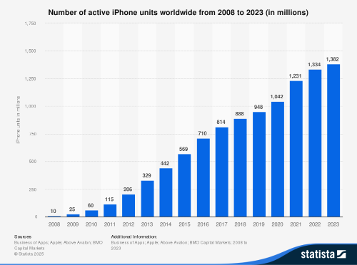
| Consumer hardware scales differently “Consumer hardware simply grows at a different pace than everything else,” explains Bornich. “We got to over a billion iPhone devices in just over a decade. And to me, humanoid robots don't make sense unless they scale.” |
| Production is scaling rapidly. 1X will reach annual production of over 20,000 units by the end of 2026, ramping up from its current output of hundreds of units. After that, the factory will target order-of-magnitude scaling, though Bornich notes that doubling alone won't cut it due to supply chain constraints, including potential shortages of basic materials such as aluminum at massive scale. The new Redwood AI model enables autonomous whole-body coordination — kneeling, climbing stairs, and even sitting and standing — while simultaneously performing household tasks such as doing laundry, through advanced generalization techniques. The real cost advantage The cost advantage goes beyond the sticker price. Robots don't need health benefits, vacations, or sleep. Morgan Stanley calculates that, even at $16,000, a robot working two 8-hour shifts costs less than $2.75/hour, with depreciation adjustments, over three years. iPhone-scale manufacturing But scale creates its own challenges. “You're not going to get [millions of robots] there without actually using robots for the work,” Bornich warns. His solution: “We want to get as fast as possible to what I call the rapid takeoff moment, where robots build robots.” |
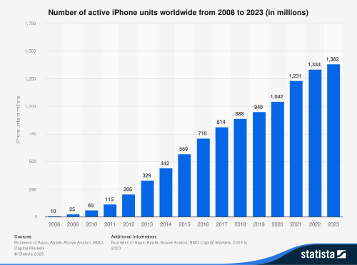
| iPhone adoption reached 1 billion users in just over a decade. Humanoid robots could reach 10 billion by 2040, especially once robots start building robots. 1X plans to deploy Neo Gamma in “a few hundred to a few thousand” homes by the end of 2025 , launching an early adoption program this year. Each residential deployment generates an enormous amount of training data: 10,000 robots produce more useful daily data than all non-duplicate YouTube uploads combined . The implications for abundance are enormous. At these prices, the global labor market, worth over $50 trillion, becomes accessible. The robot butler is no longer science fiction. It is a subscription service launching this year. |