


How far can we go with augmented reality (AR)? The demand for technology that is better, faster, more interactive, and hands-free grows every year — or rather, day after day. It is already a reality that the real and digital worlds are merging into one through this technology. And today we are answering that extraordinary question: how far can we go?
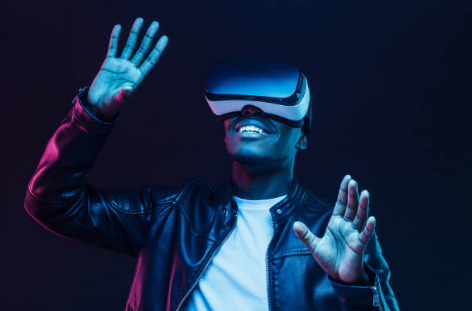
The difference between augmented reality and virtual reality is that in virtual reality, the person is immersed in a digital environment, which can be entirely computer-generated or can be a 360-degree recording of the real world captured by a special camera.
Virtual Reality
360 Camera

In augmented reality, digital information is overlaid onto the real world. This creates a blend of holographic images that appear on top of real-world imagery, providing additional information about it.
Augmented Reality

AR is triggered through an application when it scans a marker. Currently, there are three types of markers: images, shapes, and location. AR can be triggered when the app “sees” a specific image that has been pre-set for that action — this is the most common type. It can also be triggered when the app recognizes a shape, which represents a more modern, advanced, and complex technology, such as Wanna Kicks and Wanna Nails.
AR can also be triggered by GPS, in which case it activates when the person is in a pre-determined location — as seen in Pokémon Go, for example.
There are obvious benefits for gaming, some of which we have already seen — such as Pokémon Go, which was praised for encouraging players to get off the couch. However, there are also some concerns, including an increased risk of physical injury when, for example, you have to move through the real world while paying more attention to the screen than to where you are walking. Even so, augmented reality is increasingly being heralded as the future of gaming.
In fact, augmented reality technology is already present in applications such as Google Translate when it “reads” signs in other languages and translates them for you. Similarly, there are developers working on sophisticated subtitling options for deaf users. At the 2020 Tokyo Olympics, authorities hoped to make every sign in the city translatable for visitors through our phones and devices.
Military pilots can already use AR on the battlefield through heads-up display systems that show information such as altitude, speed, enemy proximity, and GPS without the pilot ever having to look down for a single second. And one second in a dogfight can mean the difference between life and death.
Returning to the original question — how far can we go with augmented reality? I cannot say how far we can go, but it is a fact that it has already evolved, and it is now called mixed reality.
The fusion of the real and digital worlds seems inevitable — for better or worse, the environments around us may one day become a vast screen loaded with infinite information.
And how far can we go with augmented reality? What do you think? Is there anything else augmented reality could do for our lives? Share your thoughts in the comments.